
“Sister”: Saturday Night Live Made Us Laugh. But the Reality Isn’t Funny.
I grew up as one of four daughters, but I’ve heard having brothers can be a very different experience.
If you haven’t seen the recent Saturday Night Live sketch called “Sister,” stop what you’re doing and watch it. Seriously. It’s hilarious. It’s uncomfortable. And if you’ve ever helped care for an aging parent, you might find yourself laughing while also wanting to throw your phone across the room.
The sketch parodies a revolutionary new elder care service called… Sister.
What’s the service? Simple. Your father needs help? Text your sister. Your mother needs someone to manage medications, appointments, prescriptions, personal care, and endless phone calls? Text your sister. Your sister will apparently drop everything, reorganize her entire life, and take care of it all.
And the best part? It’s completely free! Well, free to everyone except the Sister.
When it comes to caring for aging parents, why does everyone seem to know which daughter to call?
Saturday Night Live managed to turn an uncomfortable family dynamic into comedy gold. But the reason this sketch has resonated with so many people is that it isn’t really a joke. It’s a reflection of what happens in countless families across America.
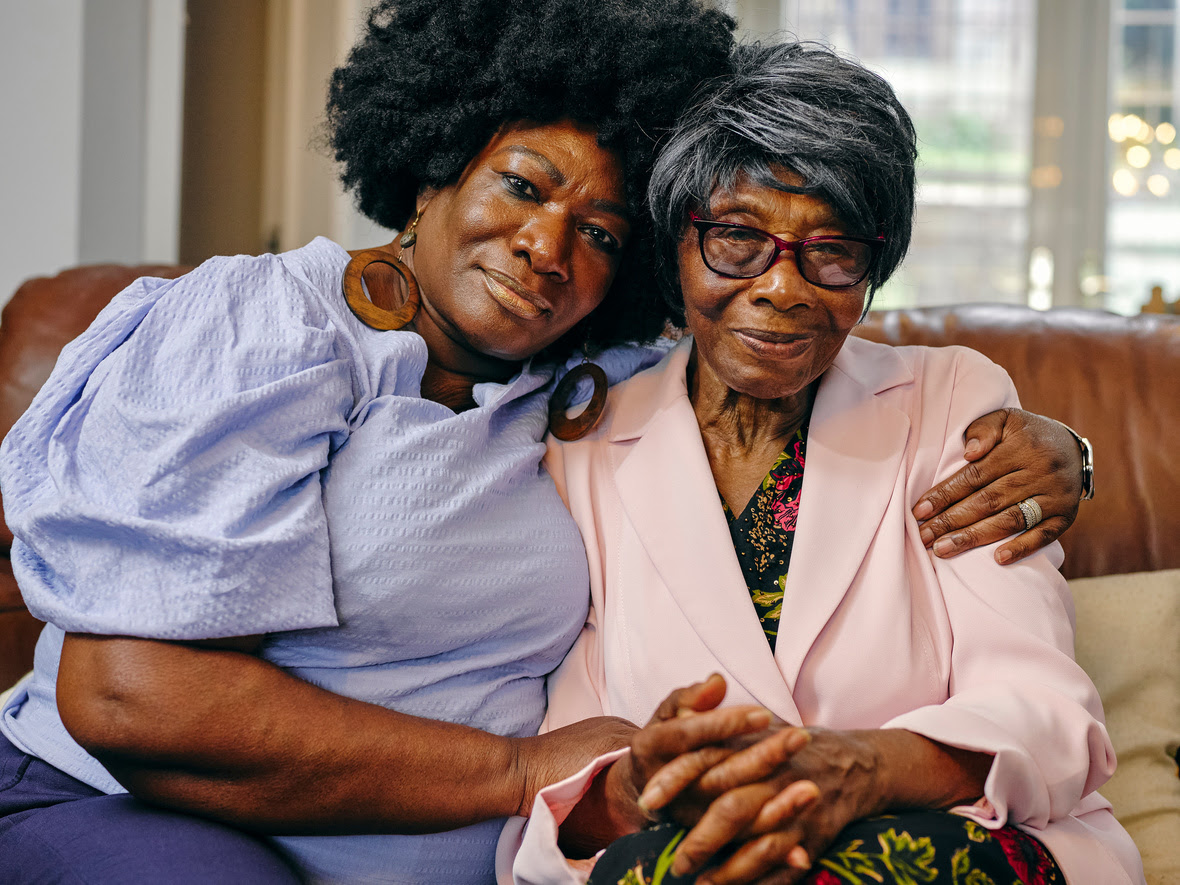
The default caregiver, usually the daughter. Let’s be honest, when Mom or Dad starts needing help, who gets the phone call? It’s often the daughter.
She’s the one who knows the medication list, remembers the next cardiology appointment, speaks to the insurance company, calls the pharmacy, researches home care, arranges transportation, checks the refrigerator, and makes sure Dad has eaten.
She’s also the one answering texts during her workday, coordinating with doctors during her lunch break, and worrying at 2 a.m. about whether Mom remembered to take her medication.
And somewhere in between all of that, she’s still expected to be a wife, mother, employee, friend, daughter, and functioning human being. Apparently, she also has unlimited vacation time, a bottomless bank account, and the ability to be in three places at once.
The problem isn’t that women don’t want to care for their parents. Of course they do. They love them. They want them to be safe, comfortable, respected, and able to maintain their independence for as long as possible.
The problem is the assumption that loving your parents automatically makes you responsible for doing everything.
Where are the brothers? This is where the conversation gets uncomfortable.
There are wonderful sons, brothers, husbands, and male caregivers who show up every day and provide extraordinary care. Men absolutely can and do serve as primary caregivers, and their contributions matter.
But we also need to be honest about the gender inequity that exists in family caregiving.
Too often, the daughter is expected to coordinate the care while the son is allowed to offer occasional assistance. One sibling becomes the full-time care manager, while another calls to ask, “So, how’s Dad doing?”
How is Dad doing? Well, he’s doing better now that someone has spent three hours on the phone with his insurance company, picked up his prescriptions, arranged his transportation, cleaned his kitchen, and figured out why his television remote isn’t working. But thanks for checking in!
There is an invisible cost of being the daughter who does everything. Women may reduce their hours, turn down promotions, use vacation time, leave jobs, or spend their own money to meet a parent’s needs. They carry the emotional burden of wondering whether they’re doing enough, whether they’re making the right decisions, and whether their parent is getting the care they deserve.
And perhaps one of the hardest parts is that the work often goes unrecognized. Nobody sees the hours spent on hold with a doctor’s office. Nobody counts the trips to the grocery store, the medication reminders, the paperwork, or the sleepless nights. Nobody puts those responsibilities on a résumé.
But they are work. Important work. Unpaid work. And they should not automatically belong to one daughter simply because she is a woman.
If you have siblings, it’s time to have a difficult conversation. Don’t wait until Mom falls, Dad gets sick, or a medical emergency forces everyone into a crisis meeting. Talk about responsibilities before the need becomes overwhelming.
And brothers, here’s a thought: Don’t wait for your sister to ask for help. Look around. Identify what needs to be done and take responsibility for it. Call the doctor. Manage the prescriptions. Take a parent to an appointment. Research transportation. Handle the bills. Arrange respite care. Spend an afternoon with Mom so your sister can spend an afternoon doing absolutely nothing.
At UR Community Cares, we believe no one should have to do it alone. This is exactly why community-based support matters.
Helping people remain independent and connected requires more than one exhausted family member trying to hold everything together. It takes a community.
Through volunteers, transportation, companionship, household assistance, technology support, and connections to community resources, we believe there are ways to help bridge the gap between what families need and what they can realistically provide.
Thank you, Saturday Night Live, for bringing to light something so many women have quietly experienced for years. Let’s make caregiving a conversation among all siblings, not an expectation placed on the daughter.
Our parents deserve care; daughters deserve equity and deserve a life of their own, too. And if your family is currently relying on the “Sister” service, please remember, it was a comedy sketch, not an actual care plan.

I hope that this sketch gets people talking about who ends up carrying the responsibility for care. AARP and the National Alliance for Caregiving’s Caregiving in the US 2025 report found that one in four American adults is a caregiver, and three in five are women. I believe that statistic can push this conversation to the forefront.
Michelle Puzzo, Executive Director
Leave a Reply